

Key Takeaways
Income tax is a direct tax levied by the Government of India on the income earned by individuals, businesses, and other entities.
Tax liability depends on residential status, total taxable income, and the tax regime selected.
Income is classified under five heads: Salary, House Property, Business or Profession, Capital Gains, and Other Sources.
India offers both the Old Tax Regime and the New Tax Regime, each with different slab rates and tax benefits.
The Old Tax Regime allows deductions such as Sections 80C, 80D, and home loan interest, while the New Tax Regime offers lower tax rates with fewer exemptions.
Taxes are collected through TDS, TCS, Advance Tax, and Self-Assessment Tax.
Filing an Income Tax Return (ITR) helps taxpayers report income, claim refunds, and comply with tax laws.
Comparing both tax regimes before filing can help reduce your overall tax liability.
Timely ITR filing avoids penalties and ensures compliance with the Income Tax Act.
Understanding how income tax works enables better financial planning and smarter tax-saving decisions.
Introduction
Income tax is one of the most important components of India's financial system, as it serves as a major source of revenue for the government to fund public services such as healthcare, education, infrastructure, defense, and social welfare programs. Every individual, business, and other eligible entity earning income above the prescribed limit is required to comply with the provisions of the Income Tax Act. Understanding how income tax works is essential not only for meeting legal obligations but also for making informed financial decisions, reducing tax liability through legitimate deductions, and planning investments effectively. Whether you are a salaried employee, a freelancer, a business owner, or an investor, having a clear understanding of tax rules can help you avoid penalties and optimize your finances. This comprehensive guide explains the complete income tax system in India, including tax regimes, income classification, tax calculation, deductions, tax collection methods, and the process of filing Income Tax Returns (ITR).
What is Income Tax and Why is it Important?
Income tax is a direct tax imposed by the Government of India on the income earned by individuals, Hindu Undivided Families (HUFs), firms, companies, and other entities during a financial year. The tax is administered by the Income Tax Department under the Income Tax Act, 1961, and regulated by the Central Board of Direct Taxes (CBDT). Unlike indirect taxes, which are collected through the sale of goods and services, income tax is paid directly by the person or entity earning the income.
The government uses the revenue collected from income tax to finance essential public services such as roads, railways, healthcare, education, national security, digital infrastructure, and welfare schemes. Therefore, paying income tax is not only a legal responsibility but also a contribution toward the country's economic development.
Income tax also promotes financial transparency and accountability. Filing Income Tax Returns (ITR) helps individuals maintain a documented record of their income, which is often required while applying for loans, visas, government tenders, and various financial products. Understanding the fundamentals of income tax enables taxpayers to remain compliant with tax laws while making informed financial and investment decisions.
Who is Required to Pay Income Tax in India?
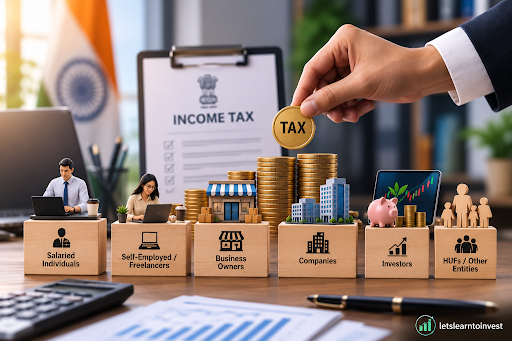
Income tax liability depends on several factors, including the taxpayer's residential status, type of taxpayer, and taxable income earned during the financial year. Individuals, companies, partnership firms, LLPs, Hindu Undivided Families (HUFs), trusts, and other legal entities may all be liable to pay income tax if they earn taxable income.
For individual taxpayers, the tax payable depends on the applicable tax slab and the tax regime chosen. Salaried employees, self-employed professionals, freelancers, business owners, and investors may all be required to pay tax if their taxable income exceeds the prescribed exemption limit.
Residential status also plays a significant role in determining taxability. Residents are generally taxed on their global income, whereas Non-Resident Indians (NRIs) are taxed only on income that is earned, received, or accrued in India. Therefore, understanding residential status is essential before calculating tax liability.
How is Income Classified for Tax Purposes?
Before calculating tax, the Income Tax Department classifies every source of income into different categories known as the five heads of income. This classification ensures that each type of income is taxed according to the applicable provisions of the Income Tax Act.
The first category is Income from Salary, which includes salary, allowances, bonuses, commissions, gratuity, and various employee benefits received from an employer. The second category is Income from House Property, which covers rental income earned from owned properties.
The third category is Profits and Gains from Business or Profession, which applies to business owners, consultants, freelancers, and professionals earning income from commercial activities. The fourth category is Capital Gains, which includes profits arising from the sale of capital assets such as shares, mutual funds, real estate, and gold. The final category is Income from Other Sources, which includes interest income, dividends, lottery winnings, gifts, and other income not covered under the previous categories.
Proper classification of income is essential because different tax rules, exemptions, and deductions may apply to each category.
What is the Difference Between the Old Tax Regime and the New Tax Regime?
India currently offers taxpayers the option to choose between two tax regimes—the Old Tax Regime and the New Tax Regime. Each regime follows a different approach to taxation.
The Old Tax Regime provides numerous deductions and exemptions that help reduce taxable income. Taxpayers can claim deductions under provisions such as Section 80C for specified investments, Section 80D for health insurance premiums, and home loan interest benefits, among others. Although the slab rates are comparatively higher, individuals who make significant tax-saving investments often benefit from this regime.
The New Tax Regime, on the other hand, offers lower tax slab rates with a simplified structure. However, most deductions and exemptions available under the old regime are not permitted. It is particularly beneficial for individuals who do not claim many deductions or prefer a simpler tax filing process. Choosing the appropriate regime depends on an individual's income level, eligible deductions, and overall financial planning strategy.
How is Income Tax Calculated in India?
Income tax calculation follows a structured process that begins with determining an individual's gross income from all eligible sources. After identifying income under each of the five heads, eligible exemptions and deductions are applied depending on the tax regime selected.
The resulting figure is known as the taxable income. The applicable income tax slab rates are then applied to calculate the basic tax liability. After this, surcharge, if applicable, and the mandatory Health and Education Cess are added to determine the total tax payable.
Any tax already paid through Tax Deducted at Source (TDS), Advance Tax, or Self-Assessment Tax is adjusted against the total liability. If excess tax has been paid, the taxpayer becomes eligible for a refund, whereas any remaining balance must be paid before filing the Income Tax Return.
This systematic approach ensures that taxpayers pay tax only on their taxable income after considering all applicable benefits.
How is Income Tax Collected and How are Returns Filed?

The Income Tax Department collects taxes through multiple mechanisms to ensure timely tax collection throughout the financial year. The most common method is Tax Deducted at Source (TDS), where employers, banks, or other specified entities deduct tax before making payments to taxpayers. Certain specified transactions are subject to Tax Collected at Source (TCS), where sellers collect tax from buyers.
Individuals with substantial tax liability may also be required to pay Advance Tax in quarterly installments during the financial year. If any tax remains unpaid after considering TDS and Advance Tax, it is paid as Self-Assessment Tax before filing the Income Tax Return.
At the end of the financial year, taxpayers file their Income Tax Return (ITR) through the Income Tax e-Filing portal by reporting their income, deductions, taxes paid, and tax liability. Filing returns on time helps taxpayers remain compliant with tax laws, claim refunds, and maintain proper financial records.
Final Thought
Understanding how income tax works in India is an essential part of effective financial planning and responsible money management. A clear understanding of taxable income, tax regimes, deductions, exemptions, and return filing enables individuals and businesses to comply with tax laws while minimizing unnecessary tax liability. By selecting the appropriate tax regime, maintaining proper financial records, and filing Income Tax Returns accurately and on time, taxpayers can avoid penalties, claim eligible refunds, and contribute to the nation's economic growth. Whether you are a first-time taxpayer or an experienced investor, staying informed about income tax rules helps you make smarter financial decisions and build long-term financial stability.
Frequently Asked Questions (FAQs)
1. What is income tax in India?
Income tax is a direct tax imposed by the Government of India on the income earned by individuals, businesses, and other eligible entities during a financial year.
2. Who is required to pay income tax?
Any individual or entity whose taxable income exceeds the applicable exemption limit under the Income Tax Act may be required to pay income tax.
3. What are the five heads of income under the Income Tax Act?
The five heads of income are Income from Salary, Income from House Property, Profits and Gains from Business or Profession, Capital Gains, and Income from Other Sources.
4. What is the difference between the Old Tax Regime and the New Tax Regime?
The Old Tax Regime offers various deductions and exemptions with higher tax rates, while the New Tax Regime provides lower tax rates with fewer deductions and exemptions.
5. What is TDS in income tax?
Tax Deducted at Source (TDS) is a mechanism through which tax is deducted by the payer before making specified payments such as salary, interest, or professional fees to the recipient.
6. Why is filing an Income Tax Return (ITR) important?
Filing an ITR ensures legal compliance, helps claim tax refunds, serves as proof of income, and is often required for loans, visas, and other financial transactions.
7. Can I choose between the Old and New Tax Regime every year?
Salaried individuals can generally choose between the Old and New Tax Regime each financial year while filing their Income Tax Return, subject to the applicable provisions of the Income Tax Act.

