Key Takeaways
FIG Living's roots go back to Inmark, a manufacturing and export business established in 1995.
FIG Living was created to bring a stronger consumer-brand and design focus to the manufacturing expertise built over decades.
Sushant Sharma is one of the key people behind the brand and previously worked with Aman Gupta at boAt.
The Cloud Pendant Lamp represents FIG's approach of combining functionality with design and ambience.
FIG has expanded from lighting into home décor, furniture and lifestyle categories.
The company reports 40,000+ consumers and around ₹12 crore ARR as of September 2026.
FIG is targeting approximately ₹18 crore ARR after the festive season; this is a target, not reported achieved revenue.
Around 80% of its portfolio uses knock-down or DIY formats, according to company-reported figures.
FIG says it has secured 36+ design patents.
In September 2026, Aman Gupta invested through SailThru Ventures, although the investment amount and valuation were not disclosed.
The company's next phase is focused on expanding distribution, physical touchpoints, brand experiences and its wider home & living portfolio.
FIG Living: From Manufacturing Heritage to a ₹12 Crore Home & Living Brand
What if a home-lighting brand was not actually born in a startup office?
What if its roots went back nearly three decades to a family-run manufacturing and export business?
That is where the story of FIG Living begins.
Before FIG Living became a design-led consumer brand, its foundation was connected to Inmark Exports, a manufacturing and export business that traces its origins to 1995. Over the years, Inmark built expertise in lighting, handcrafted products, manufacturing and exports.
Then came a new generation and a new idea: Can manufacturing expertise be transformed into a consumer brand built around design?
That question helped shape FIG Living.
Today, FIG Living has grown from its lighting-focused beginnings into a broader home and lifestyle brand, while reporting an annual revenue run rate of around ₹12 crore, more than 40,000 consumers, and a target of approximately ₹18 crore ARR following the festive season.
And in September 2026, the journey took another interesting turn when Aman Gupta invested in FIG Living through SailThru Ventures.
The interesting part?
Sushant Sharma, FIG Living's co-founder, had previously worked with Aman Gupta at boAt.
So, the story moved from colleagues → founder → investor.
Let's understand how FIG Living reached this point.
From Inmark to FIG Living
The roots of FIG Living can be traced to Inmark Exports, a business established in 1995 with expertise in manufacturing and exporting lighting products.
According to FIG Living, the brand began as part of Inmark Exports, a Government of India-recognised Star Export House with experience in handcrafted and origami-inspired lighting.
This manufacturing background became an important advantage.
Instead of starting from zero and building manufacturing capabilities later, FIG could build upon an existing understanding of:
Product development
Lighting
Manufacturing
Materials
Design
Export markets
Quality control
In August 2026, FIG Living said it began operating as Inmark Consumer Private Limited, building on the manufacturing and design expertise developed through Inmark.
This makes FIG's journey different from a typical consumer startup story.
It is essentially a transition from manufacturing expertise to consumer-brand building.
The Founder Behind the Consumer Brand
At the centre of FIG Living's consumer-brand journey is Sushant Sharma.
Sushant previously worked in brand and marketing at boAt, where he worked with Aman Gupta. FIG Living's official website identifies Sushant Sharma as Co-Founder & Director, responsible for operations and new product development.
His experience brought another important ingredient to the business: understanding how to build a consumer brand.
That created an interesting combination:
Manufacturing expertise from Inmark + consumer-brand experience from the newer team.
FIG Living was built around the belief that lighting should not merely illuminate a room.
It should influence how the room feels.
The company's positioning focuses on turning homes into comfortable, personal spaces where people can relax, recharge and spend their time outside their structured workday.
The Cloud Lamp: A Product That Helped Build the Story

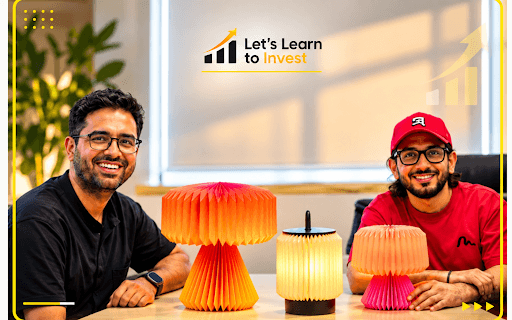
One of FIG Living's notable products is its Cloud Pendant Lamp.
The product uses a cloud-inspired form and origami-style detailing to create a decorative lighting experience rather than functioning simply as a conventional light source.
FIG describes the Cloud Pendant Lamp as a product that was originally designed and internationally celebrated.
This is important because it reflects the larger FIG philosophy:
Lighting is not just a utility. It can also become part of the personality of a home.
From products such as cloud-inspired and origami lamps, FIG began developing a design language around contemporary home interiors.
From Lighting Brand to Home & Living Brand
FIG Living initially focused primarily on lighting.
Its portfolio included:
Table lamps
Portable lamps
Pendant lamps
Wall lights
Floor lamps
But the company's ambition gradually expanded.
It moved into adjacent categories including:
Side tables
Accent furniture
Tabletop products
Home décor
Other lifestyle products
Recent reporting confirms that FIG is attempting to evolve from a lighting-focused business into a broader home and living platform, while keeping lighting at the centre of its design identity.
Its current website also showcases categories such as floor lamps, table lamps, pendant lamps, wall lamps, portable lamps, cushions, candles, figurines and home décor.
Why Manufacturing Could Be FIG Living's Advantage
One of the most interesting aspects of FIG's business model is that product development and manufacturing remain closely connected.
The company develops products in-house and works with an affiliated manufacturing facility in Greater Noida. FIG says it has secured more than 36 design patents.
Another notable feature is its use of knock-down and DIY formats.
Around 80% of FIG Living's portfolio reportedly follows these formats, allowing products to be packaged, transported and assembled more efficiently.
For home products, logistics can become challenging because furniture and lighting products can be bulky.
A knock-down approach can therefore help with:
Packaging → Transportation → Storage → Delivery → Consumer Assembly
This manufacturing-led approach is one of the key parts of FIG's business story.
FIG Living's ₹12 Crore ARR Journey
The company's consumer traction has also become more visible.
As reported in September 2026, FIG Living had:
₹12 crore annual revenue run rate
40,000+ consumers
Approximately 20% quarter-on-quarter growth
A target of around ₹18 crore ARR following the festive season
The ₹18 crore figure is a target, not reported achieved revenue.
That distinction is important when discussing the company's financial performance.
The business is therefore at an interesting stage: it has moved beyond being an early product experiment, but is still building distribution, brand awareness and a wider home-product portfolio.
The Aman Gupta Connection Comes Full Circle

September 2026 created perhaps the most interesting chapter in FIG Living's journey.
Aman Gupta invested in FIG Living through SailThru Ventures.
The investment amount and valuation were not publicly disclosed in the reports announcing the deal.
But the connection between Aman and Sushant makes the investment particularly notable.
Sushant had previously worked with Aman at boAt.
Years later, Sushant was building his own company and Aman became an investor in it.
For FIG Living, the investment is expected to support areas including:
Distribution expansion
Physical consumer touchpoints
Brand experiences
Product development
Broader home and lifestyle expansion
The company has also indicated an interest in international design partnerships and collaborations.
Questions About FIG Living
1. What is FIG Living?
FIG Living is an Indian design-led home and lighting brand that started with decorative lighting and is expanding into broader home and lifestyle categories.
Its current portfolio includes lighting, home décor and selected lifestyle products.
2. Who founded FIG Living?
FIG Living's official website identifies Sushant Sharma and Siya Wadhawan as Co-Founders & Directors, with Varun Sharma as Director. Sushant leads operations and new product development, while Siya leads marketing and sales. Varun brings the manufacturing and export experience associated with Inmark.
3. What is the connection between FIG Living and Inmark?
FIG Living originated from the Inmark manufacturing and export ecosystem.
Inmark had decades of experience in lighting manufacturing and exports, providing FIG with an existing product-development and manufacturing foundation.
4. What happened to FIG Living in September 2026?
In September 2026, Aman Gupta invested in FIG Living through SailThru Ventures.
The investment amount and valuation were not publicly disclosed.
5. How much revenue does FIG Living generate?
FIG Living reported an annual revenue run rate of approximately ₹12 crore in September 2026 and was targeting approximately ₹18 crore ARR following the festive season.
6. What products does FIG Living sell?
The company started with lighting and now offers products across categories such as table lamps, floor lamps, pendant lamps, wall lamps, portable lamps and home décor, with additional lifestyle categories being developed.
7. What is special about FIG Living's manufacturing model?
The company develops products in-house, works with an affiliated manufacturing facility in Greater Noida and uses knock-down/DIY formats across nearly 80% of its portfolio. It also reports more than 36 design patents.
8. What is FIG Living's future ambition?
The company wants to move beyond being primarily a lighting company and develop into a broader home and living platform, with lighting remaining an important part of its design identity.
Final Thought
FIG Living's story is interesting because it connects two different worlds.
One is manufacturing built through decades of experience with Inmark.
The other is consumer branding built around design, storytelling and the changing way Indian consumers think about their homes.
The company's evolution from lighting to a wider home and lifestyle portfolio shows how manufacturing capability can become the foundation for a consumer brand.
And the Aman Gupta investment adds another layer to the story.
A former professional connection has now become an investor-founder relationship.
The bigger question for FIG Living is no longer simply whether it can sell attractive lighting products.
It is whether it can turn its manufacturing capabilities, design portfolio and consumer traction into a large, recognisable Indian home and living brand.
Frequently Asked Questions
1. When was FIG Living founded?
FIG Living's official website describes the brand as being born in 2024. Recent media reports describe the company as founded in 2025, so the official company source is the clearer reference for the brand's stated origin.
2. Is FIG Living part of Inmark?
FIG Living originated from the Inmark ecosystem and was initially part of Inmark Exports. Since August 2026, the company says FIG Living has operated as Inmark Consumer Private Limited.
3. Who is Sushant Sharma?
Sushant Sharma is a Co-Founder & Director of FIG Living. He leads operations and new product development and previously worked in brand and marketing at boAt.
4. Did Aman Gupta invest in FIG Living?
Yes. Aman Gupta invested in FIG Living through SailThru Ventures in September 2026. The investment amount and valuation were not publicly disclosed.
5. What is FIG Living's ARR?
FIG Living reported an annual revenue run rate of approximately ₹12 crore and said it was targeting approximately ₹18 crore ARR after the festive season.
6. What makes FIG Living different from a normal lighting company?
The company combines design-led product development with manufacturing capabilities. It has expanded beyond lighting into home décor and lifestyle categories, while using knock-down/DIY formats across a large part of its portfolio.
7. What is FIG Living's future plan?
FIG Living aims to become a broader home and living platform, expanding distribution, physical consumer touchpoints, brand experiences and its product-development pipeline while retaining lighting as an important part of its identity.