

Key Takeaway
Time interval rebalancing means adjusting your portfolio at fixed periods to maintain balance
It helps control risk by keeping your asset allocation aligned with your goals
This strategy promotes discipline and removes emotional decision making
Rebalancing allows you to buy low and sell high in a systematic way
Consistency in rebalancing leads to stable long term wealth creation
Time Interval (Periodic Rebalancing)
A Small Story to Begin
There was a farmer who used to water his plants every day without fail. His neighbor, however, watered plants randomly sometimes too much, sometimes not at all. After a few months, the first farmer had a beautiful, balanced garden, while the second struggled with unhealthy plants.
Investing works in a similar way. If you maintain consistency and rebalance your portfolio at regular time intervals, your financial garden grows strong and stable.
Consistency over time creates results that intensity cannot sustain.
What is Time Interval Rebalancing?
Time interval rebalancing, also known as periodic rebalancing, means adjusting your investment portfolio at fixed intervals like monthly, quarterly, or yearly to maintain your original asset allocation.
For example, if you decided:
60% in stocks
40% in bonds
Over time, if stocks perform well, your portfolio might become:
70% stocks
30% bonds
Rebalancing means bringing it back to 60:40, again and again, at fixed time intervals.
What does “time interval” really mean in investing?
Time interval simply refers to a fixed period like 3 months, 6 months, or 1 year after which you review and adjust your investments. Instead of reacting to market movements daily, you follow a disciplined schedule. This helps remove emotional decision-making and keeps your strategy consistent. In simple terms, it’s like setting a reminder to “check and fix your portfolio” at regular times, no matter what the market is doing.
Why is periodic rebalancing important?
Periodic rebalancing is important because markets are always changing. Some assets grow faster than others, which can disturb your original plan. If you ignore this, your risk level increases unknowingly. For example, if equity rises sharply, your portfolio becomes more risky than intended. Rebalancing helps you maintain balance, control risk, and stick to your financial goals. It ensures that you don’t become overconfident during bull markets or overly fearful during downturns.
How does time interval rebalancing work in real life?

In real life, let’s say you invest ₹1,00,000:
₹60,000 in stocks
₹40,000 in bonds
After one year:
Stocks grow to ₹80,000
Bonds remain ₹40,000
Now your portfolio becomes:
67% stocks
33% bonds
If your rebalancing interval is yearly, you will sell some stocks and buy bonds to bring it back to 60:40. This disciplined action helps you “book profits high and buy low” a key principle of investing.
What are the different time intervals you can choose?
Investors can choose different time intervals based on their comfort and goals. Common options include monthly, quarterly, half-yearly, and yearly rebalancing. Beginners usually prefer yearly rebalancing because it is simple and avoids frequent transaction costs. More active investors may prefer quarterly intervals to stay closer to their target allocation. The key is consistency once you choose an interval, stick to it.
What are the advantages of time interval rebalancing?
Time interval rebalancing offers multiple benefits. First, it brings discipline into investing and removes emotional decisions. Second, it helps manage risk by maintaining your desired asset allocation. Third, it encourages profit booking from overperforming assets and reinvestment into underperforming ones. Lastly, it simplifies decision-making since you don’t need to track markets daily. Over the long term, this approach can lead to stable and predictable wealth creation.
Are there any disadvantages of periodic rebalancing?
Yes, like every strategy, periodic rebalancing has some limitations. It may lead to transaction costs, especially if done frequently. Also, in strong trending markets, rebalancing may slightly reduce returns because you are selling winning assets early. However, this is the trade-off for reducing risk. Another challenge is sticking to the plan many investors skip rebalancing during extreme market conditions, which defeats the purpose.
Time interval vs threshold rebalancing what’s the difference?
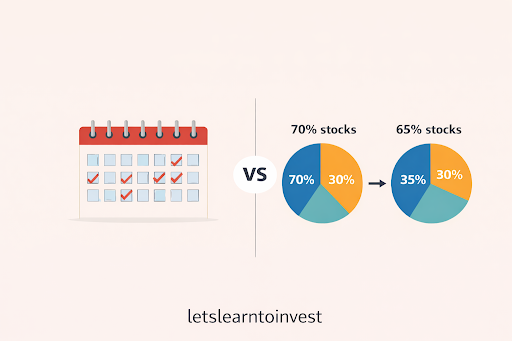
Time interval rebalancing is based on fixed schedules, like every 6 months. Threshold rebalancing, on the other hand, happens when your asset allocation deviates beyond a certain percentage say 5% or 10%. Time-based is simple and easy to follow, while threshold-based is more responsive to market changes. Many experienced investors combine both methods for better results.
Who should use time interval rebalancing?
Time interval rebalancing is ideal for beginners, long-term investors, and those who prefer a simple strategy. If you don’t want to track markets daily and want a disciplined approach, this method is perfect. It is also suitable for salaried individuals and SIP investors who want steady growth without overthinking market movements.
Final Thoughts
Time interval rebalancing is not about timing the market it’s about respecting time in the market. It teaches patience, discipline, and consistency. In a world where people chase quick returns, this strategy quietly builds wealth in the background.
Think of it like maintaining your health. You don’t exercise once and expect results. You follow a routine. Similarly, rebalancing at regular intervals keeps your portfolio healthy.
In the long run, simple strategies done consistently often outperform complex strategies done occasionally.
FAQ
1. What is the best time interval for rebalancing?
There is no “perfect” interval, but yearly or half-yearly rebalancing works well for most investors.
2. Does rebalancing guarantee profits?
No, but it helps manage risk and improve long-term consistency.
3. Is rebalancing required for small portfolios?
Yes, even small portfolios benefit from discipline and proper allocation.
4. Can I automate rebalancing?
Yes, many platforms and mutual funds offer automatic rebalancing options.
5. Should I rebalance during market crashes?
Yes, sticking to your schedule during downturns can actually improve long-term returns.
